

What FDA’s crackdown on areca nut means for tobacco-adjacent products—and why regulatory due diligence is more critical than ever.
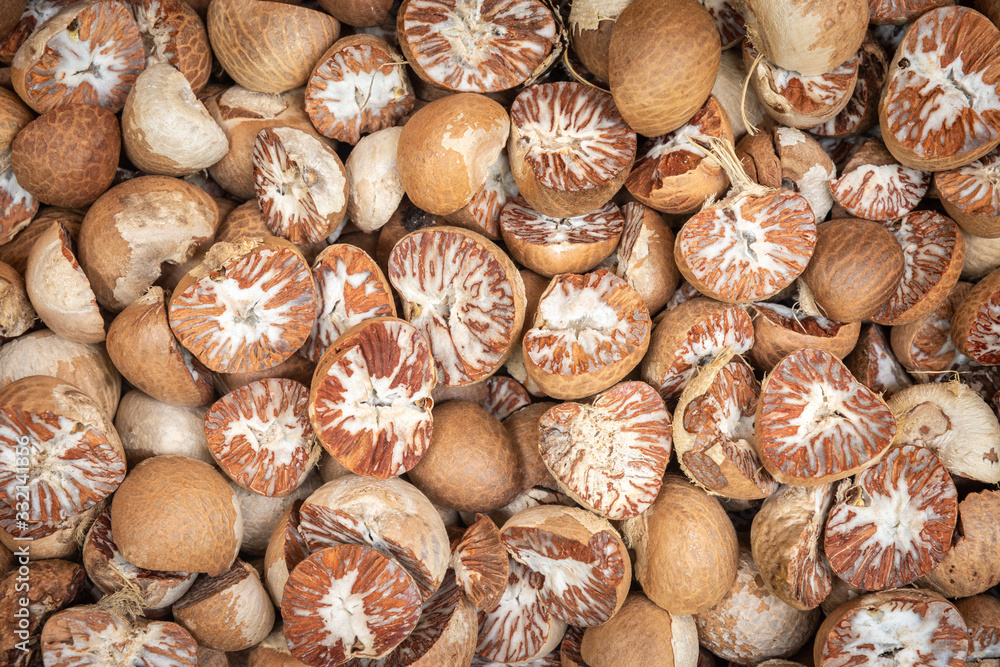
At McKinney RSA, are seeing growing interest in developing and marketing oral products containing areca nut—whether alone or combined with tobacco or nicotine. However, recent regulatory developments underscore the complex safety and compliance challenges associated with this ingredient.
On May 8, 2025, the U.S. Food and Drug Administration (FDA) issued a public alert advising that dinnerware made from the sheath of the areca palm tree (Areca catechu) may not be legally marketed in the United States. This begs the question: Why does FDA care about your dinnerware?
The answer—quite literally—is nuts.
Specifically, areca (betel) nut, the fruit seed of the A. catechu palm tree that grows in South Asia and the Western Pacific Islands. This tree produces naturally occurring toxic alkaloids in various parts—including both its leaves and seeds. FDA-conducted research shows that these alkaloids migrate from areca palm dinnerware into food at levels that pose potential dietary safety risks.[1]
On the same day (5/8/25), FDA issued Import Alert 23-15 to agency field personnel indicating they may detain without physical examination of food products including finished dietary supplements and bulk dietary ingredients that contain areca nuts, and foodware made from A. catechu palm leaves. The charge listed specifically for areca nuts is:
The article is subject to refusal of admission pursuant to Section 801(a)(3) in that it appears to contain a poisonous or deleterious substance which would ordinarily render the article injurious to health. [Adulteration, Section 402(a)(1)]
The import alert does not apply to areca nuts that contain, or are packaged with, tobacco, as these are considered tobacco products. This raises another question: If areca nuts can’t be safely used to make plates that touch our food, why is it okay to use them in tobacco products that go in our mouth?
Areca nut alone has been evaluated as carcinogenic to humans (Group 1) by the International Agency for Research on Cancer (IARC),[2] yet it remains one of the most used addictive substances globally, after nicotine, alcohol, and caffeine.[3],[4] When areca nut is placed in the buccal cavity, the alkaloid arecoline, which has been evaluated as probably carcinogenic to humans (Group 2A) by IARC,[5] is absorbed producing a psychoactive effect that is believed to drive addiction. The chewing of areca nut is often called betel chewing where a betel quid is chewed. Betel quid (also referred to as “pan” or “paan”) is typically composed of at least areca nut, betel leaf, and slaked lime; the leaf is folded to hold the other contents inside and is placed between the gum and cheek where it can be chewed.[6] It may also contain tobacco as well as various other spices like cardamom, turmeric, and fennel seed. Betel quid with and without tobacco has been evaluated as carcinogenic to humans (Group 1) by IARC, with their evaluation conclusions noting, “a common component of all betel-quid preparations is the areca nut. This evaluation is based on strong evidence that areca nut causes oral submucous fibrosis, a precancerous condition in humans, and sufficient evidence of carcinogenicity in experimental animals. In addition, there is strong supporting evidence for this conclusion.”2
Areca nut can also be bought in foil packets that have been premixed with other ingredients. These are sold as “pan masala” when prepared without tobacco and “gutkha” when smokeless tobacco is included.[7] In the U.S., gutkha is most commonly used by South Asian immigrants.[8],[9] Culturally specific products, like gutkha, have been reported as a means to preserve ethnic traditions and identity.9 In many South Asian communities, gutkha usage is a widely accepted habit that is often included in social gatherings, family settings, and celebrations.[10] Despite the well-documented harms of gutkha and a ban by all Indian states in 2012 to reduce the prevalence of oral cancer, the product remains widely available.
So, why does FDA care about your dinnerware? Because your cups, plates, and bowls shouldn’t add carcinogens to your meals. Perhaps it’s time to turn over a new leaf that doesn’t contain areca nut and open the floor for solutions on how to protect consumers from these products, including those considered tobacco products.
We would advise tobacco and nicotine product manufacturers to not use areca nut or extracts as ingredients consider these ingredients, as they will likely face a series of scientific, regulatory and potentially legal hurdles beyond those already seen for tobacco and nicotine products
[1] Mangrum, J. B., DeJager, L., & Begley, T. (2025). Investigation into the presence of alkaloids in Areca catechu-based single-use food-contact articles (FCA). Food Additives & Contaminants: Part A, 42(4), 526–538. https://doi.org/10.1080/19440049.2025.2469271
[2] International Agency for Research on Cancer. (2004). Betel-quid and Areca-nut Chewing and Some Areca-nut-derived Nitrosamines. IARC Monographs on the Evaluation of Carcinogenic Risks to Humans Volume 85. Available from: https://publications.iarc.fr/Book-And-Report-Series/Iarc-Monographs-On-The-Identification-Of-Carcinogenic-Hazards-To-Humans/Betel-quid-And-Areca-nut-Chewing-And-Some-Areca-nut-derived-Nitrosamines-2004
[3] Papke, R. L., Bhattacharyya, I., Hatsukami, D. K., Moe, I., & Glatman, S. (2020). Betel Nut (areca) and Smokeless Tobacco Use in Myanmar. Substance use & misuse, 55(9), 1385–1394. https://doi.org/10.1080/10826084.2019.1624774
[4] Singh, P. K., Yadav, A., Singh, L., Mazumdar, S., Sinha, D. N., Straif, K., & Singh, S. (2021). Areca nut consumption with and without tobacco among the adult population: a nationally representative study from India. BMJ open, 11(6), e043987. https://doi.org/10.1136/bmjopen-2020-043987
[5] International Agency for Research on Cancer. (2021). Acrolein, Crotonaldehyde, and Arecoline. IARC Monographs on the Evaluation of Carcinogenic Risks to Humans Volume 128. Available from: https://publications.iarc.fr/602
[6] New South Wales Ministry of Health. (2021, September 22). Betel nut products and preparations. NSW Health. https://www.health.nsw.gov.au/oralhealth/prevention/Pages/betel-nut-preparations-use.aspx
[7] Stokes, C., Pino, J. A., Hagan, D. W., Torres, G. E., Phelps, E. A., Horenstein, N. A., & Papke, R. L. (2022). Betel quid: New insights into an ancient addiction. Addiction biology, 27(5), e13223. https://doi.org/10.1111/adb.13223
[8] Banerjee, S. C., Ostroff, J. S., Bari, S., D’Agostino, T. A., Khera, M., Acharya, S., & Gany, F. (2014). Gutka and Tambaku Paan use among South Asian immigrants: a focus group study. Journal of immigrant and minority health, 16(3), 531–539. https://doi.org/10.1007/s10903-013-9826-4
[9] Mukherjea, A., Morgan, P. A., Snowden, L. R., Ling, P. M., & Ivey, S. L. (2012). Social and cultural influences on tobacco-related health disparities among South Asians in the USA. Tobacco control, 21(4), 422–428. https://doi.org/10.1136/tc.2010.042309
[10] Messina, J., Freeman, C., Rees, A., Goyder, E., Hoy, A., Ellis, S., & Ainsworth, N. (2013). A systematic review of contextual factors relating to smokeless tobacco use among South Asian users in England. Nicotine & tobacco research: official journal of the Society for Research on Nicotine and Tobacco, 15(5), 875–882. https://doi.org/10.1093/ntr/nts193